
Mars Mission The Musical launches on 19 August 2026 from Parktown Boys' High School, bringing a fresh new look to high school musical and theatre productions by blending key elements—science, technology and sport—with South African history and a daring dive into Afrofuturism within a specifically South African context.

A Brief Look at Afrofuturism
Afrofuturism is defined by the Cambridge Dictionary as “a style of literature, music, art, etc. that combines science-fiction elements with ideas from the culture and history of Africa and African people.” In a broader sense, it extends beyond genre into an aesthetic and philosophy that imagines the future through African history, creativity and innovation.
Emerging in the mid-1970s and coined in 1993, Afrofuturism explores the intersection of African cultures with science, technology and speculative storytelling. It uses imagined futures to reclaim history and project visions of progress shaped by African perspectives.While Afrofuturism acknowledges global experiences, its focus is not on a departure from Africa, but on the connection — between past and future, tradition and technology, memory and possibility.
The Plot
MMTM blends science fiction and alternate history in a story about a young boy from 1970s Soweto who dreams of flying, as well as two teenagers from a pandemic-stricken future who are thrown back through time. The story further involves the collision of South African historical icons and a misunderstood Martian civilisation when a stolen alien artefact threatens Earth. Across decades and planets, the characters learn that survival depends not on dominance but on communication, trust, science and shared humanity. The story culminates in a symbolic act of unity that reframes conflict through sport, cooperation and imagination.
The Characters
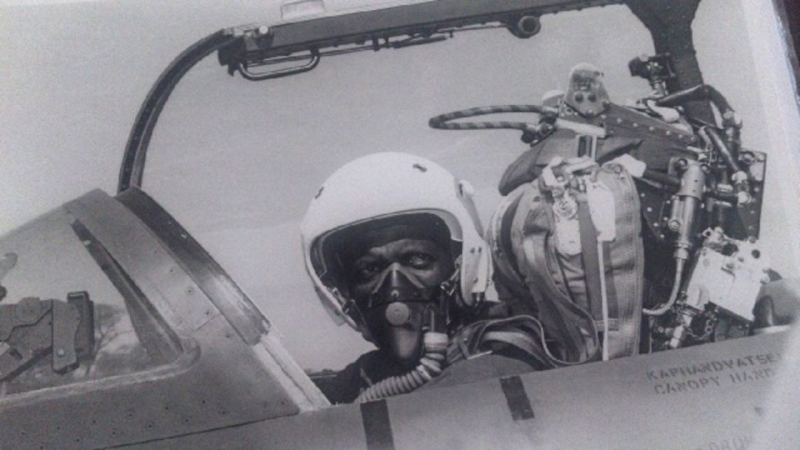
Major General Tsoku Khumalo, the first black Air Force pilot in South African history is featured in the play as a key lead character, realising his future despite the limitations of an apartheid South Africa. Solar Girl and Lightning Boy are our other leads, teens from 2020 Johannesburg navigating pandemic era life and learning that emotion and art are just as important to humanity as science and data.
The supporting cast comprises the characters Dr. Alfred B. Xuma, Madie Hall Xuma, Dolly Rathebe, Mary Bailey, The Bad Referee and the narrator: Nasty B. The supporting ensemble each represent a key theme of the story, offering important learning experiences, stories and interactions for the lead roles to grow from, offering a unique look into the history and culture of South Africa.
This diverse and varied cast are the basis of the themes of Afrofuturism in the story and provide a succinct look into the development of such a future in South Africa through their individual stories and collective push of the main plot.

School of Rock
We’re thrilled to announce our
first corporate sponsor!
School of Rock Sandton and Parktown North will be featured right opposite the legendary Dolly Rathebe in our Dream Edition show programme — keeping the music of our icons alive and inspiring the next generation of young South African artists.
Thank you, School of Rock, for partnering with us to bring Mars Mission The Musical to life!
Why I Wrote Mars Mission The Musical - Nathan Waywell
By the time I reached thirty, I had been part of three successful bands. Music had given me a great deal, but there was a thought I couldn't shake — that I was capable of more than expressing myself. I wanted to help others find their own voice.
Theatre for young people is one of the most powerful environments I know for building confidence. There is something that happens on a stage, particularly during the teenage years, that can quietly reshape a person. So that's where I decided to aim.
If I could make a positive impact at that age, I believed the ripple effect on our society as a whole would be worth far more than anything I could achieve alone.
In South Africa, with the weight of our history, I began looking for heroes from our past whose stories hadn't fully been told. People who faced the most brutal conditions this country could produce and still reached for greatness. To me, those are the most inspiring stories imaginable for young South Africans today. Not invented heroes — real ones.
People talk about what's wrong. They say their piece and then return to their lives. I decided to use whatever abilities I have differently. In the script, NASA's DART mission serves as a reminder that even the smallest, most precise intervention — aimed at exactly the right moment — can change a trajectory entirely. You don't have to move the meteor. You just have to nudge it.
That's what I'm trying to do.
Why I Chose to Work on Mars Mission The Musical - Nat Ramabulana
For more than twenty years, I have been fortunate to build a career as a professional actor. Throughout that journey, one belief has remained constant: the arts have the power to transform lives. They unlock creativity, wisdom, confidence and self-discovery in ways few other experiences can.
That is why working with young people has always been so important to me. The arts give young people a voice. They provide a space where they can express themselves, discover their strengths and see their own potential reflected back at them. Watching young performers grow in confidence and find the courage to stand in their truth is one of the most rewarding aspects of what I do.
What makes this work even more meaningful is that it is never a one-way exchange. While I hope to give something back through my experience, I learn just as much from the young people I work with. Their energy, passion, imagination and willingness to dream without limitation is infectious. They remind me why I fell in love with storytelling in the first place.
My involvement with Mars Mission The Musical began through a chance meeting with Nathan outside another school. What started as a simple conversation has grown into a fantastic creative partnership. From the beginning, I was drawn to Nathan’s vision. His ideas are bold, imaginative and unapologetically South African. He is committed to telling stories that celebrate who we are while challenging young people to think bigger about themselves and the world around them.
What excites me most about Mars Mission The Musical is its ability to educate while entertaining. Learning and laughter are powerful companions and this production creates a space where young people can engage with science, history, creativity and possibility all at once. It encourages curiosity while inspiring confidence.
When Nathan invited me to be part of the project, I immediately said yes. This is a new South African play, a new South African voice and an opportunity to celebrate the brilliance, diversity and uniqueness of our people. It is a project that believes in the potential of young people and the power of the arts to shape the future.
That is something I am proud to be part of.


